
The Shepherd’s Solitude
The Good ShepherdThis flow traces the isolation created by command as George Krause carries responsibility for people whose fears and losses he cannot fully share.
increasing Bearing strength in each event
 decreasing
Bearing strength in each eventdecreasingA Stranger to Himself
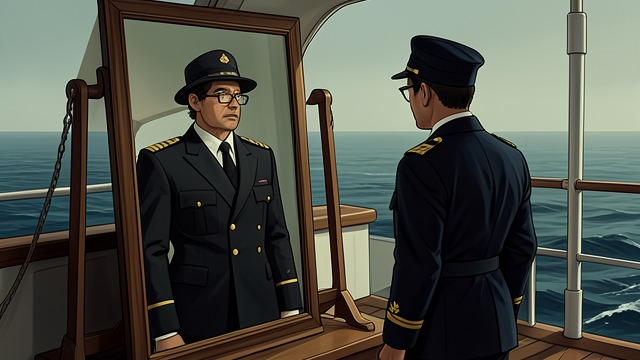
A Stranger to Himself
The mirror inspection
George Krause looks at his reflection after bathing but feels no recognition or sympathy toward it. He regards the body in the mirror as something assigned to duty rather than as a self to comfort.
Impersonal command
His habit of viewing himself from a distance helps him act without hesitation. It also deepens the isolation between the officer who gives orders and the vulnerable man who must carry them out.
The private cost
The mirror’s stranger returns through the voyage as fatigue and emotion press closer. George Krause’s professional composure does not mean he is untouched; it means he has learned to keep experience out of view.
A Captain Alone Among Men
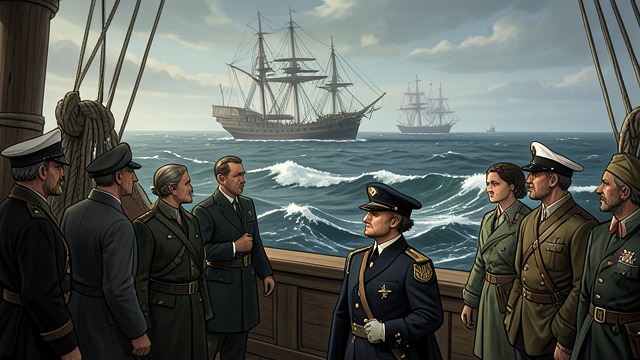
A Captain Alone Among Men
A crowded bridge
George Krause stands among officers and sailors, yet the decision about the wolfpack warning belongs to him alone. No one else aboard knows exactly what the delayed message means for the convoy.
Responsibility withheld
He cannot use radio to share the warning without risking a disclosure that may not help. The information therefore adds weight to his command without reducing his isolation.
Solitude as duty
The crowded pilot-house makes the loneliness more pronounced, not less. George Krause believes that an officer does not need an audience for doing his duty, even when the consequences are shared by thousands.
Goodbye to the Convoy
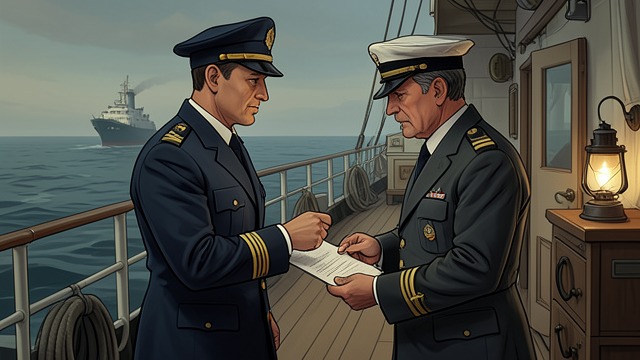
Goodbye to the Convoy
A closing exchange
As Keeling leaves the convoy, George Krause sends a message thanking the commodore and the ships for their cooperation. The reply thanks him for his work and marks the command’s end.
Separation after danger
The convoy’s ships are now beyond his immediate care, but George Krause feels sadness as he watches them. The people he protected will continue east without him, and he may never see them again.
No ceremony for release
He leaves the bridge for his cabin without a final speech or public celebration. The end of responsibility arrives as fatigue and loss rather than as a simple feeling of triumph.
Wednesday morning before the first contact
Wednesday afternoon after the Admiralty warning arrives
Friday morning after the convoy sends its thanks
